How do you plan a bilingual wedding ceremony?
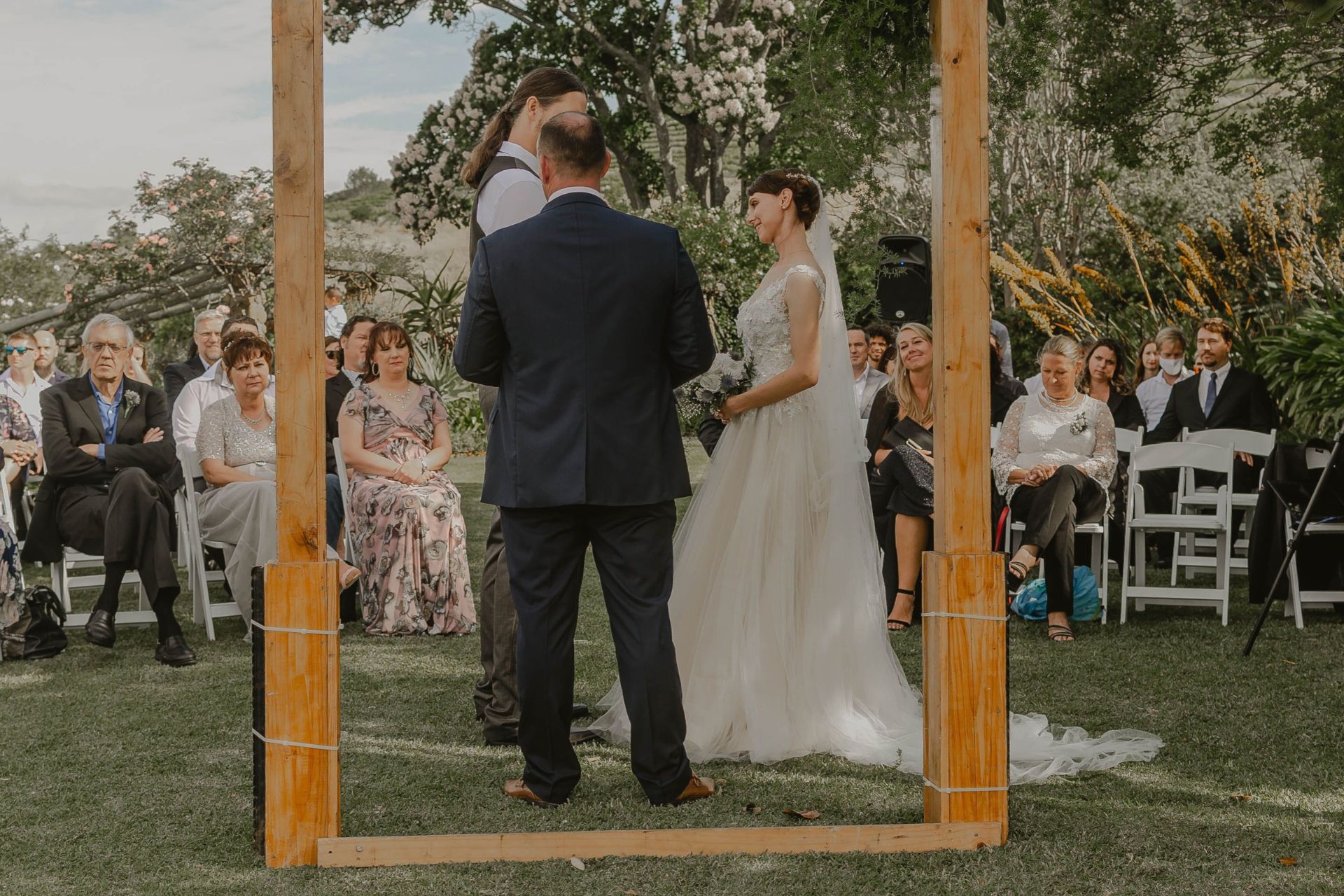
Two families, two languages and one ceremony. If your grandmother hears the vows in Samoan and your partner’s uncle hears them in English, everyone gets to be in the moment together, and nobody has to wait until afterwards to hear what was said.
It’s a familiar picture in Aotearoa. The 2023 Census recorded people here speaking over 150 languages, and Stats NZ found just under 30% of New Zealanders were born overseas.
A bilingual celebrant, or a celebrant and an interpreter
The simplest set-up is a celebrant who speaks both languages. One voice carries the whole ceremony, moving between languages as it goes. Whoever you choose, check they’re an approved marriage celebrant, because the law requires one to solemnise your marriage.
If your celebrant speaks one language, you can bring in an interpreter. Guidance from Births, Deaths and Marriages, or BDM, says the couple and the witnesses must all understand the language the celebrant uses, and the celebrant must understand theirs.
If they don’t understand one another, you’ll need an interpreter, who signs BDM’s declaration form before the ceremony to say they’ll interpret faithfully. Your celebrant signs it too.
That legal rule is about you, your witnesses and your celebrant. Your guests are a separate question, and how much you translate for them is up to you.
What the law says about your vows
Under section 31 of the Marriage Act 1955, each of you must say to the other “I AB, take you CD, to be my legal wife or husband”, or words to similar effect. BDM’s guide for celebrants adds partner as an option. Your full legal names must be spoken at least once, and at least two witnesses need to be there.
The rest of the ceremony is yours to shape. The Act lets couples marry according to whatever form and ceremony they choose, and BDM says celebrants can work with your customs, traditions and cultural beliefs. BDM even has its registry ceremony vows in both te reo Māori and English.
The Act doesn’t name a language for the vows, so talk to your celebrant early about which language your legal words will be in and how the interpreter fits around them. You might say the legal line in one language and your personal vows in both.
Sharing the rest of the day
Saying every line twice can make a ceremony feel long, so you might pick the moments that matter most to each family. A welcome in both languages, the vows and the pronouncement are natural places to translate. Longer passages can run in one language with a translation printed alongside.
A programme with both languages side by side lets guests follow along at their own pace. At a venue with a screen, projected translations work the same way. Either way, send the final wording to whoever is translating well ahead, so names and meaningful phrases land correctly.
Readings are a lovely way to bring family in. BDM notes that people other than the celebrant can take part, such as by reading a poem or singing a song. A parent or grandparent reading in their own language, with a translation printed in the programme, gives both families a moment that belongs to them.
At the reception, a bilingual MC can keep the night moving for everyone. If yours speaks one language, you might ask a cousin or friend to co-host, or have speakers keep a short summary on hand in the other language.
There’s no single right way to do this. You might translate almost everything, or choose a few key moments and let the joy fill in the gaps. Do what feels right for your two families, and everyone in the room will know they’re part of it.