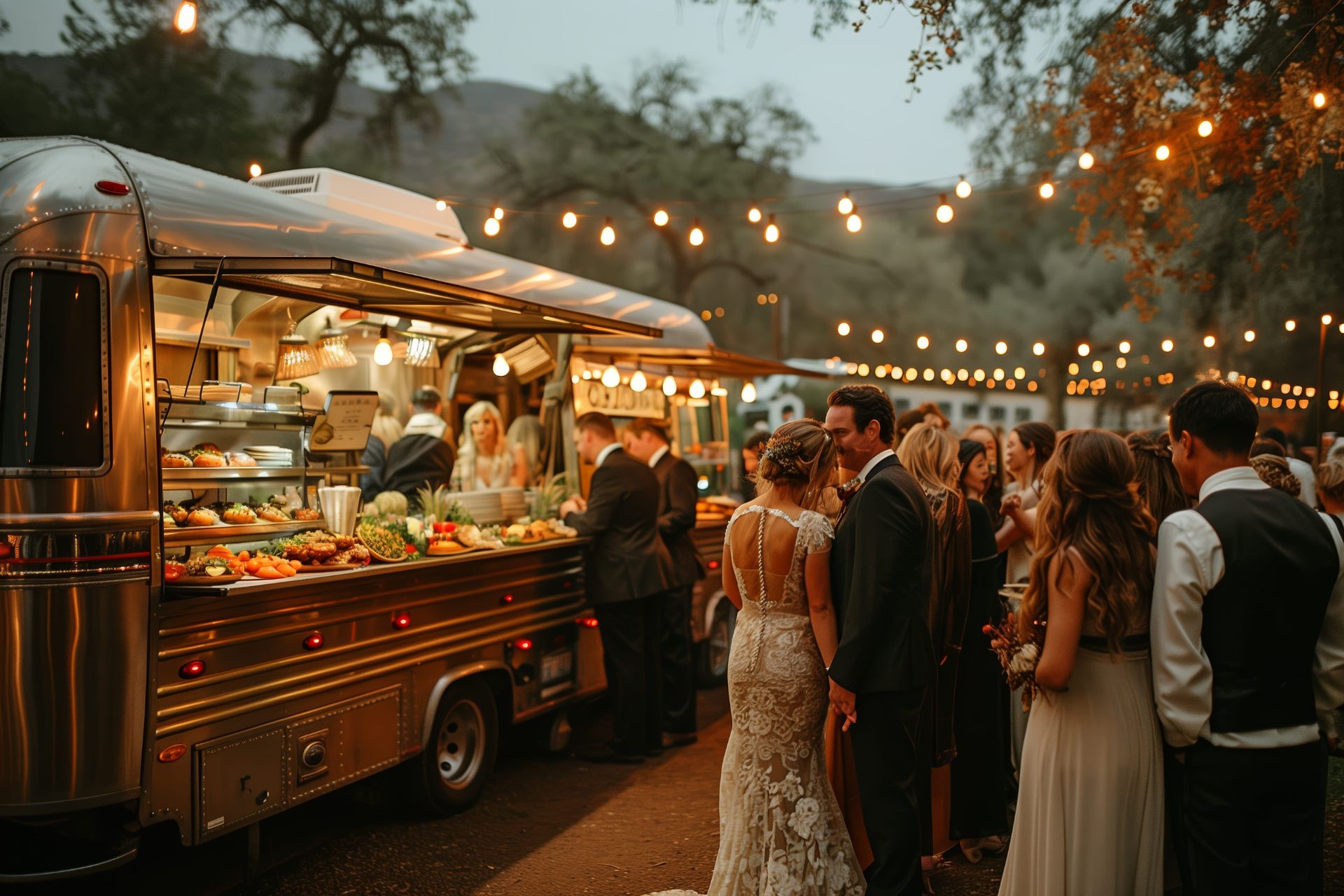
Food trucks at weddings
Whether it is gourmet burgers, wood-fired pizza, dumplings, or ice cream served late into the night, food trucks bring a festival-style energy that traditional catering often cannot match. But like anything that looks effortless, it needs careful planning to get right.
Why food trucks work so well at weddings
They instantly change the atmosphere
Food trucks shift the mood of a wedding in a way few other catering options can. The moment a truck arrives, the energy becomes more casual and interactive. Guests are no longer waiting to be served at tables. Instead, they are moving around, chatting, and choosing what they want to eat. It feels less formal and more like a celebration that is unfolding naturally.
Variety without complication
One of the biggest advantages is choice. Instead of locking into a single plated menu, food trucks allow you to offer different styles of food that suit different guests. One truck might handle savoury mains while another focuses on snacks or desserts. This makes it easier to cater for dietary needs and personal preferences without overcomplicating the planning process.
They suit more relaxed wedding styles
Food trucks work especially well for couples who do not want a traditional sit-down meal. They fit naturally into outdoor weddings, warehouse spaces, garden settings, and festival-style celebrations. The format feels less rigid and more reflective of how people actually want to eat and move around at modern weddings.
They can be more cost-flexible
Depending on your choices, food trucks can sometimes be more affordable than traditional catering. The structure is often simpler, and you may reduce costs associated with staffing or formal services. However, premium trucks or multiple vendors can still increase the budget, so it is more about how you design the experience than a guaranteed saving.
How to make food trucks work at your wedding
Think carefully about guest flow
The biggest issue with food trucks is usually the queues. If you have a large guest list and only one serving point, waiting times can become long and disrupt the flow of the evening. The key is to plan for movement. This might mean multiple trucks, staggered serving times, or ensuring guests have drinks or entertainment nearby while they wait.
Design a clear food zone
Where you place the trucks matters more than people expect. You want them to be accessible without creating congestion in key areas like the dance floor or ceremony space. A designated food area helps structure the space and makes the experience feel intentional rather than chaotic.
Do not forget seating options
Even the most relaxed food truck setup needs somewhere for guests to sit and eat comfortably. This does not need to be formal seating. A mix of picnic tables, standing barrels, lounges, or informal seating areas works well. Giving people options allows them to feel easy and natural.
Match the food to your overall vibe
The best food truck choices feel like they belong at the wedding. A pizza truck suits a rustic outdoor setting, while tacos or bao buns feel right at home in a modern city venue. Dessert trucks or coffee carts also work well as a later addition when the energy of the night shifts.
When food trucks work best
Food trucks are not suited to every wedding style, but they excel in certain environments. They work particularly well for outdoor weddings, festival-inspired celebrations, warehouse or industrial venues, and more casual receptions. They are also excellent for late-night food when guests want something quick and satisfying after dancing.
The late-night moment everyone loves
One of the most memorable uses of food trucks is late-night service. After hours of dancing and celebrating, the arrival of a burger van or pizza truck can completely reset the energy of the room. It brings guests back together and often becomes one of the most talked-about moments of the entire wedding. It is simple, but incredibly effective.
Things to watch out for
Food trucks do require practical planning. Weather can be a factor, especially for outdoor weddings, so having cover or a backup option is important. Power supply and space requirements also need to be confirmed in advance. Communication with guests is key, so everyone knows when food will be served and where to go.
Why food trucks are here to stay
Food trucks are no longer a passing trend. They are part of a wider shift toward more relaxed, experience-driven weddings. Couples are moving away from overly formal structures and focusing more on atmosphere, interaction, and enjoyment. Food trucks fit perfectly into that shift because they turn catering into part of the experience rather than just a necessity.
Food trucks work because they change the rhythm of a wedding. They make food feel social, flexible, and part of the celebration rather than a formal pause in the day. When planned well, they do not just feed your guests. They create moments people remember.