What “sustainable floristry” actually means
Sustainable floristry is about reducing environmental impact across every stage of the floral process; from how flowers are grown, to how they’re arranged, transported, and what happens to them after the wedding.
At its simplest, it focuses on three key ideas: using seasonal and locally grown flowers, reducing waste, and avoiding harmful single-use materials.
One of the biggest industry shifts has been moving away from imported blooms where possible, and instead prioritising seasonal, locally grown flowers, which typically have a lower carbon footprint and are often fresher and longer lasting.
This also means working with what’s naturally available rather than forcing specific blooms year-round, which helps reduce energy use, transport emissions, and waste.
The end of floral foam (and what replaces it)
One of the biggest changes in wedding floristry is the move away from floral foam.
Floral foam has long been used to hold flowers in place, but it is a single-use plastic product that breaks down into microplastics and does not fully biodegrade, creating long-term environmental impact.
Because of this, many florists are now designing entirely foam-free arrangements, and they’re not limited in creativity because of it.
Instead, they’re using alternatives such as chicken wire, reusable metal flower frogs (kenzans), natural branch structures, and other mechanical supports that can be reused or composted after use.
These techniques often create a more natural, “garden-grown” look, where flowers appear to flow and move rather than sit rigidly in place.
Designing with what’s in season (not what’s trending)
Seasonality is one of the most important parts of sustainable floristry.
Rather than importing specific flowers year-round, sustainable florists work with what is naturally in bloom locally. This not only reduces transport emissions but also results in flowers that are often more fragrant, resilient, and visually in tune with the time of year.
This approach also encourages couples to be more flexible with colour palettes and design direction, but in return, they often get something more unique and less predictable than imported, off-season blooms.
It’s a shift away from “Pinterest perfection” and towards something more organic and place-based.
Foliage, texture, and a more natural style
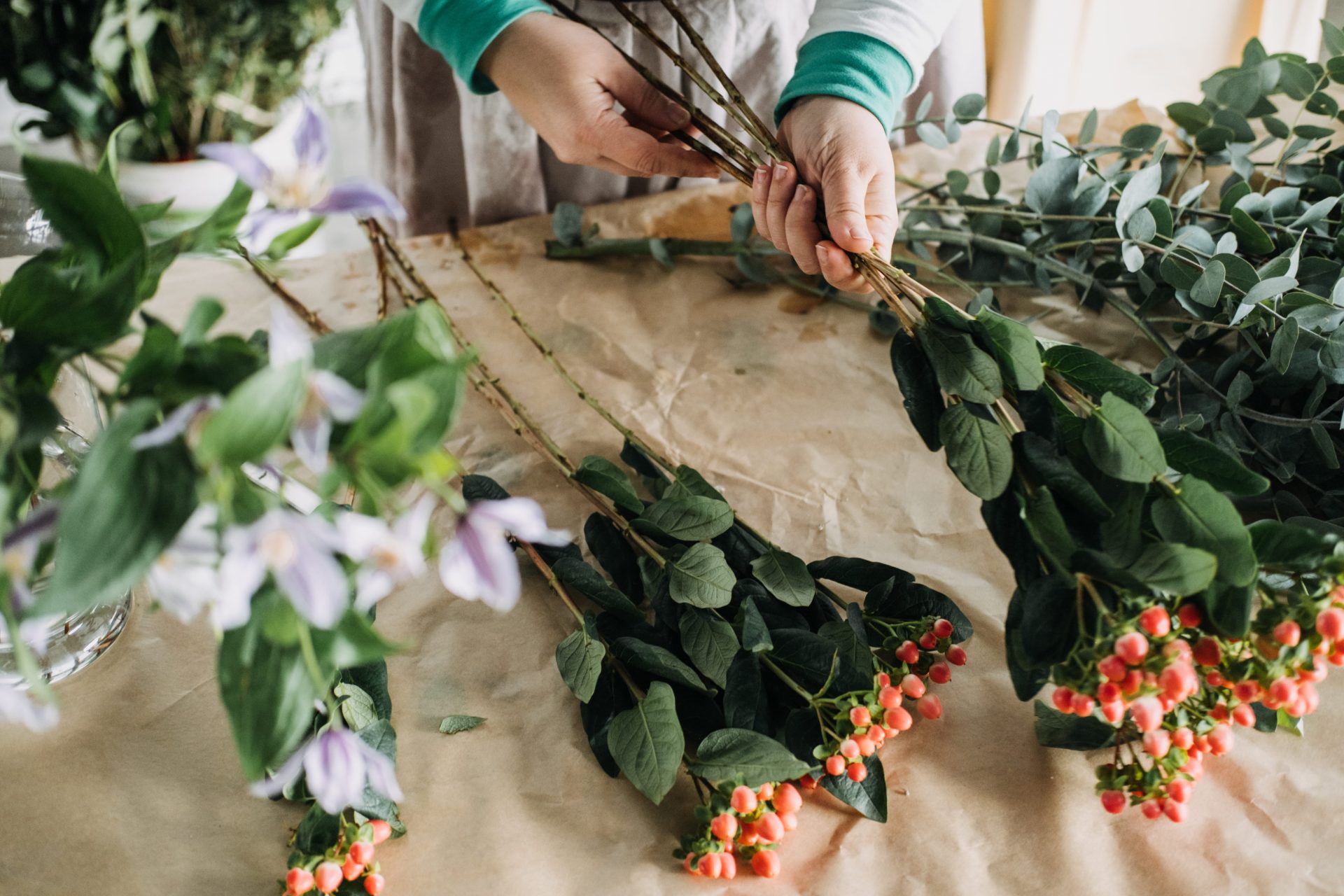
Another characteristic of sustainable floristry is the increased use of foliage and structural greenery.
Instead of relying on large quantities of cut flowers, many florists are building arrangements that incorporate branches, leaves, grasses, and seasonal greenery to create volume and movement.
This doesn’t just reduce flower waste, it also creates a more natural, layered aesthetic that suits modern weddings, especially outdoor or garden settings.
The result feels less like a constructed arrangement and more like something that has grown into the space.
Reducing waste beyond the flowers themselves
Sustainability in floristry isn’t just about stems. It also extends to everything that surrounds them.
That includes reusable or hired vessels instead of single-use containers, avoiding unnecessary plastic packaging, and designing arrangements that can be repurposed or gifted after the wedding.
Some couples now even plan for their flowers to be donated after the event, extending their life beyond the wedding day and reducing waste at the same time.
It’s a small shift, but one that adds up quickly when scaled across an entire event.
Can sustainable floristry still look luxurious?
Yes, and this is where the perception is changing fastest.
Sustainable wedding flowers are no longer associated with “simple” or “minimal.” In fact, many high-end floral installations now prioritise foam-free techniques, seasonal sourcing, and abundant garden-style designs.
The focus has shifted from control and uniformity to movement, texture, and natural composition.
In many cases, sustainability is what gives the design its softness and authenticity rather than taking anything away from it.
By working with the seasons, reducing waste, and choosing more natural design methods, couples can have wedding flowers that feel just as impactful visually, but far more thoughtful behind the scenes.