Is your AI moodboard realistic?
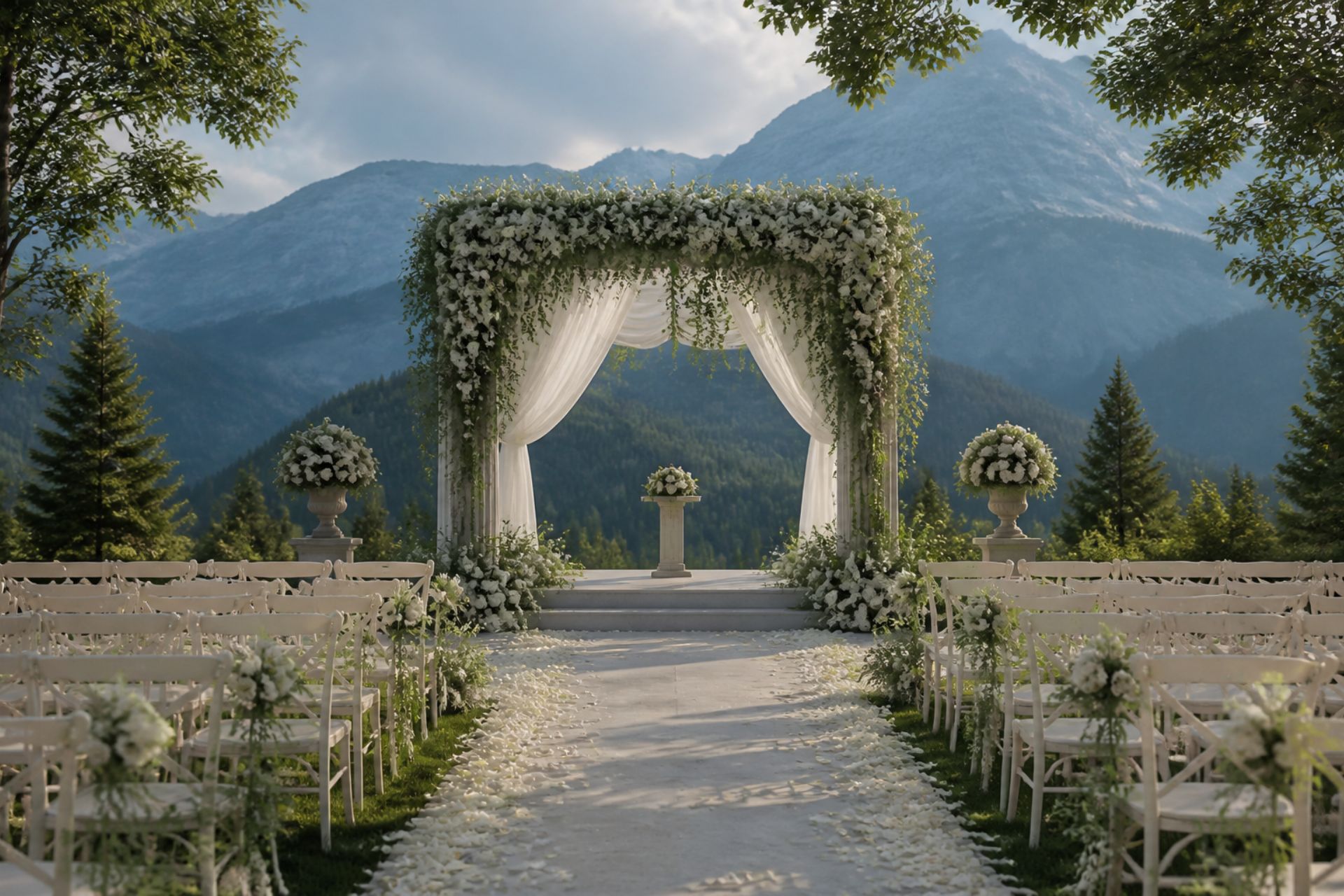
Type any venue and a Pinterest aesthetic into an AI image generator, and within seconds you’ll have a photorealistic mock-up of your dream wedding reception.
You’ll be dazzled by the florals cascading from the ceiling, the elegant draping in every corner, the ornate tablescape that looks plucked from a magazine. It’s a compelling pitch.
It’s also, according to creative director at The Little Hire Company Fallon Broadley, often wildly disconnected from what a venue, a budget, or physics will actually allow.
Fallon says this has been the first season she’s seen couples arrive with AI-generated renders of their chosen venue, already styled, asking for a quote to match.
In one case, a couple sent through an image imagining a heritage building draped floor to ceiling in elaborate floral installations. It was a look completely unworkable in a venue where nothing can be fixed to the walls or ceiling for heritage reasons, let alone realistic on an average styling budget.
To their credit, she says, that particular couple acknowledged upfront that the image was AI-generated and likely out of reach financially. But the gap between the picture and the price tag is a real and growing pain point.
“It’s great as a starting point, but they don’t quite understand what things cost,” Fallon says of the tools. The issue is that an AI render has no concept of budget, structural constraints, heritage restrictions, or the labour required to actually execute a look.
A client can generate a $50,000 floral fantasy on a $5,000 budget with a few prompts, and have no way of knowing that from the image alone.
There’s also a trust gap emerging around AI more broadly in the wedding space, Fallon suggests, comparing it to how easily people now scroll past an obviously AI-generated ad without giving it much attention.
She says her own business steers clear of using AI for imagery or copywriting, preferring the credibility of real, human-made work. That’s something she suspects couples are quietly picking up on too, even if they can’t always articulate why an AI-rendered concept feels a little hollow.
That doesn’t mean AI has no place in the process. Used as a loose inspiration tool, a way to visualise a colour palette or a general vibe before a consultation, it can help couples communicate what they’re drawn to.
The risk comes when a generated image is treated as a literal, achievable brief rather than a jumping-off point for a conversation with an actual stylist, who can translate the fantasy into something that’s structurally possible, venue-appropriate, and within budget.
Fallon’s advice for couples tempted to lead with an AI mock-up is that the real value, and the real cost, lies in the human expertise that brings a vision to reality. By all means, bring your imagery along, but treat it as a mood board, not a blueprint.
Visit https://www.thelittlehirecompany.co.nz/ for more information.